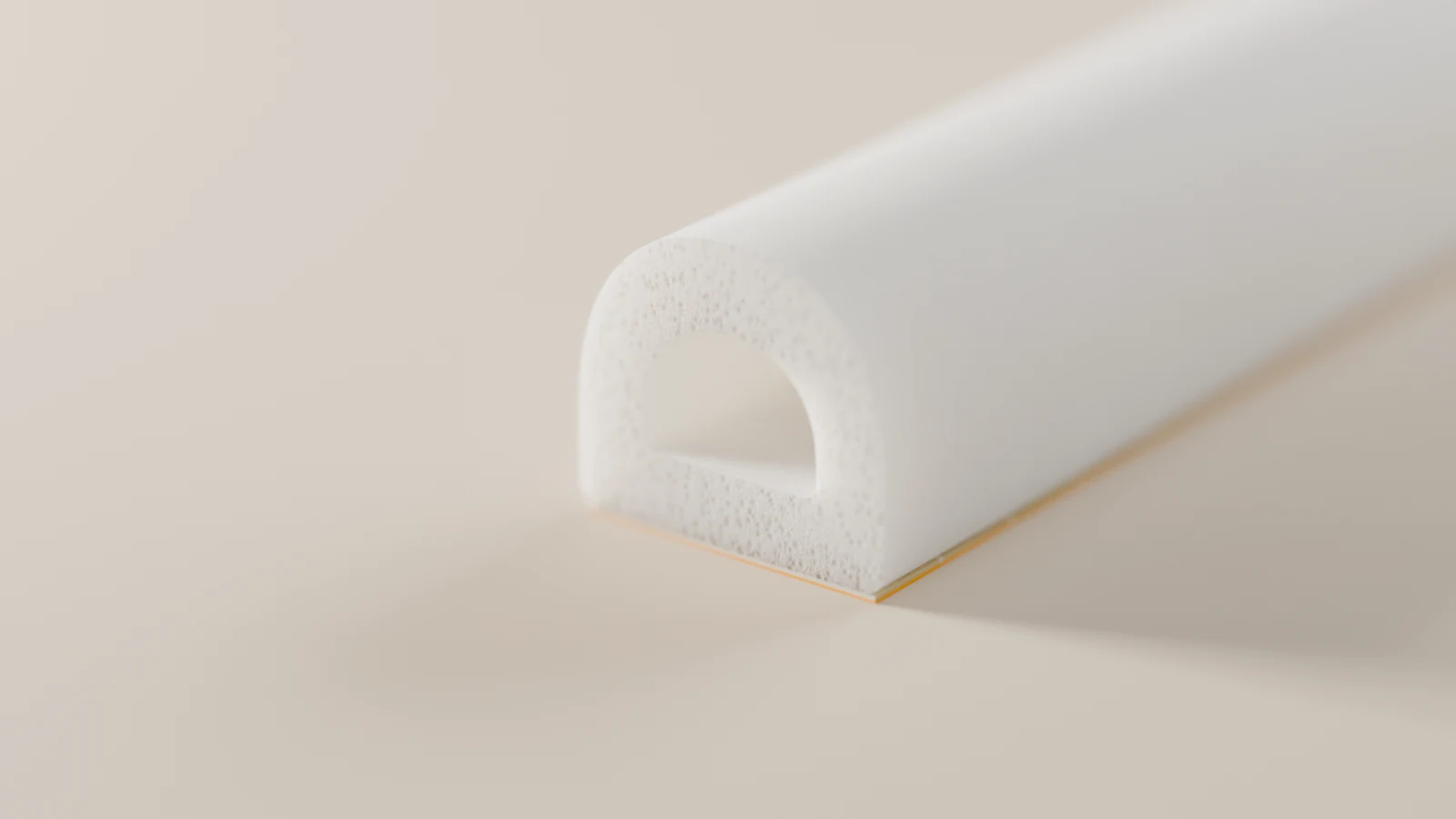
D-Profile Door Seal
Seen end-on, the seal has a flat base and a hollow, rounded crown. The cavity gives the foam space to deform when the door closes.
Inspect this profileAcoustic technology
A gap beside a door and an echo inside a room call for different treatments.
Airborne sound can pass through an opening, even when a door is closed. A fitted perimeter seal can close that gap. The door leaf, threshold and surrounding construction still influence what you hear.
Inside the room, sound bounces between surfaces. Absorptive materials can soften those reflections and shorten reverberation.
Door gaps provide a path for airborne sound. Absorptive materials can reduce reflections inside a room.
A gap at the edge of a closed door leaves an air path between rooms.
Conceptual illustration · No measured product dataMaterials in use
Seen end-on, the seal has a flat base and a hollow, rounded crown. The cavity gives the foam space to deform when the door closes.
Inspect this profile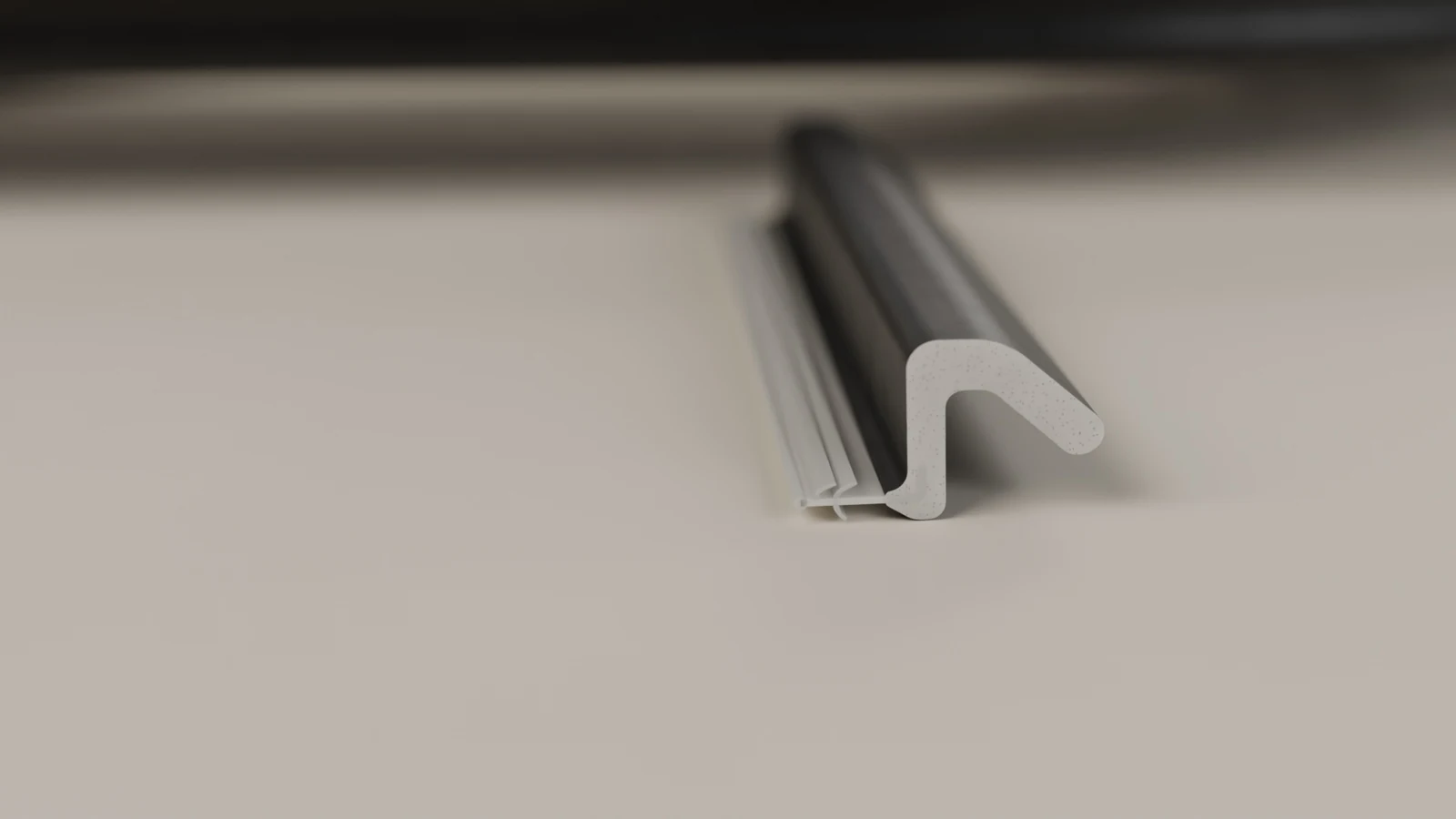
A thin film wraps the foam core. Along the back, a carrier supports the barbed edge that grips the groove in the frame.
Inspect this profile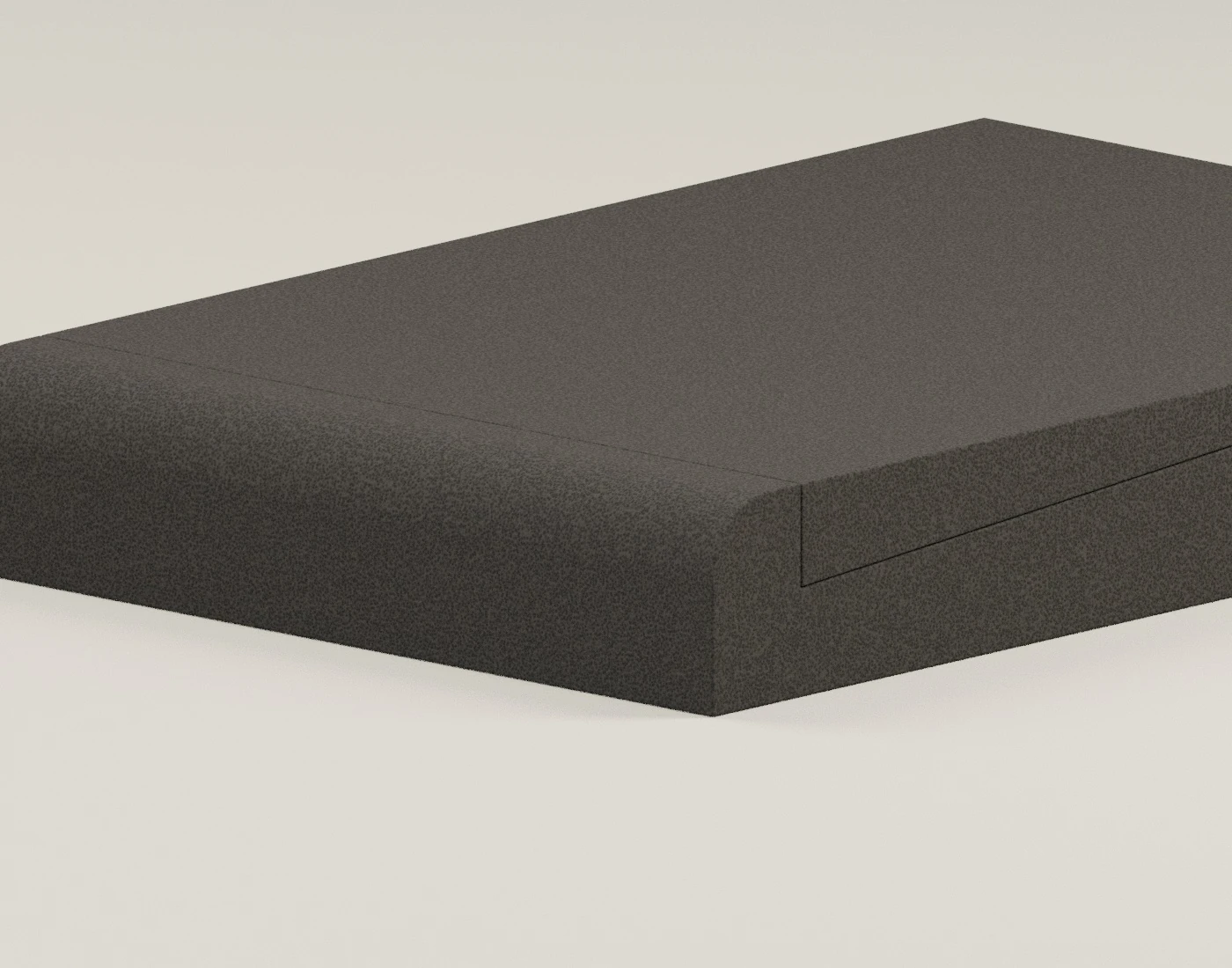
Each pad has a base and a removable wedge. Changing their arrangement changes the angle at which the speaker rests.
Inspect this profileAcoustics reference · U.S. General Services Administration, Sound Matters. Product-specific attenuation measurements are unavailable.